


Many mid-sized companies in Indonesia encounter remarkably similar challenges: sales data that fails to align with warehouse inventory, financial reports that take weeks to finalize, and operational leakages caused by insufficient approval controls.
Without an integrated system, management often makes decisions based on assumptions rather than reliable, real-time data.
These issues typically stem from fragmented applications or a heavy reliance on manual spreadsheets. This is where Enterprise Resource Planning (ERP) becomes essential—serving as a bridge that unifies all departments under a single, coherent language of data.
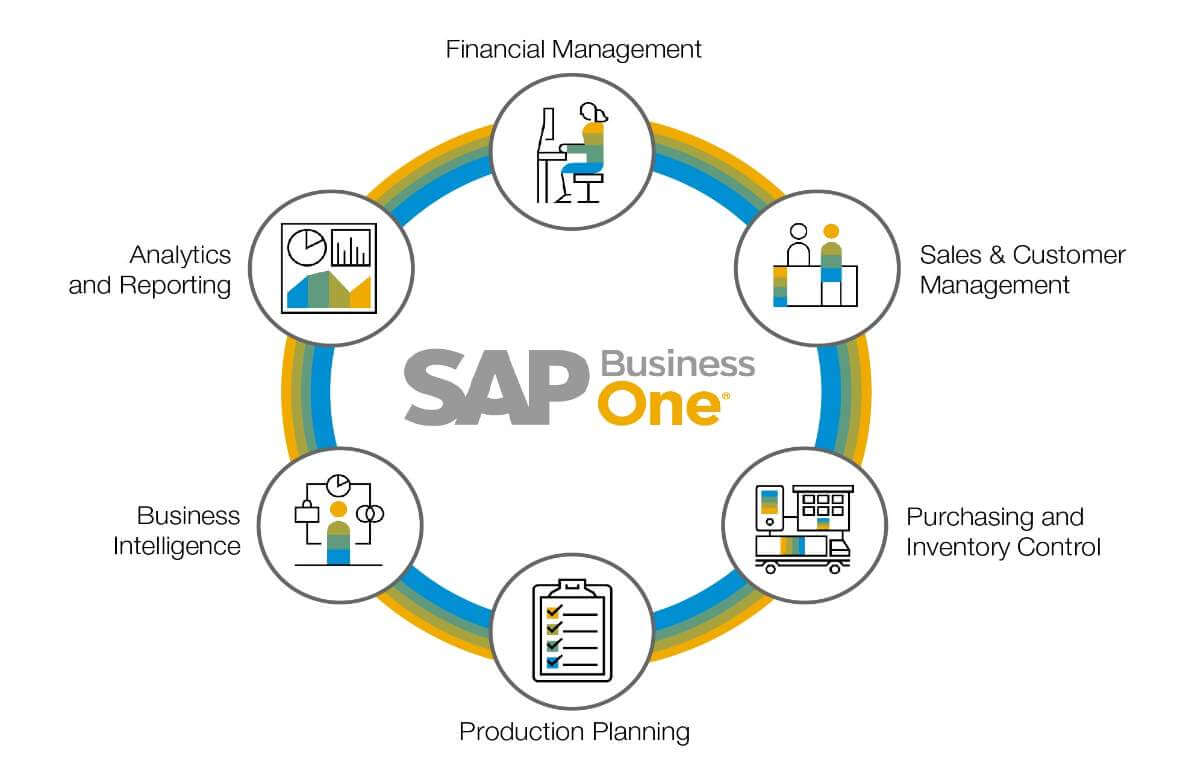
In simple terms, SAP Business One is an ERP system designed to help companies integrate financial, sales, purchasing, and inventory processes into a single, real-time connected platform.
Why Your Company Needs a Modern ERP
In the digital era, speed of information is a competitive advantage. A modern ERP is not merely a transaction-recording tool; it is the foundation for sustainable growth.
Companies require ERP systems to eliminate departmental silos, ensure tax compliance (such as Indonesia’s e-Faktur integration), and provide transparent audit trails for both business owners and external auditors.
7 Key Advantages of Using SAP Business One

As a practitioner frequently working in the field, I have observed that the strength of SAP Business One lies not merely in its reputation, but in the depth of its functionality—carefully designed for SMEs and mid-sized enterprises.
1. Seamless Integration Across All Departments
No more duplicate data entry. When the Sales team creates a Sales Order, the warehouse team immediately sees delivery requirements, while Finance can monitor incoming cash flow projections. All modules—Purchasing, Sales, Inventory, and Finance—communicate automatically.
2. Real-Time Data Visibility
There is no need to wait until month-end to view stock positions or profitability. With database technologies such as SAP HANA, data is processed within seconds. Balance Sheet and Profit & Loss reports are available anytime—without exhausting manual closing processes.
3. Business Control Through Approval Templates
One of SAP Business One’s powerful features is the Approval Template. Transactions exceeding customer credit limits or purchases beyond budget thresholds can be configured to require director-level approval before proceeding.
4. Automated Accounting Journals
Every operational transaction—such as GRPO when goods arrive or Delivery when goods are dispatched—automatically generates a Journal Entry in the General Ledger (GL). This ensures that inventory values on the balance sheet remain synchronized with physical stock.
5. Scalability for Growth
SAP Business One is designed to evolve alongside your business. You can begin with essential modules and expand to include Production, Service Management, or Project Management as operational complexity increases.
6. User-Friendly and Flexible
The SAP Business One interface is intuitive and easy for new users to learn. Additionally, the system allows lightweight customization through User-Defined Fields (UDF), enabling businesses to capture unique operational data without altering core program code.
7. Robust Audit Trail
Every data modification is permanently recorded. You can identify who changed pricing, when the change occurred, and the previous value. This capability is vital for preventing fraud and maintaining financial data integrity.
SAP Business One Advantage Framework
| ADVANTAGE | OPERATIONAL IMPACT | FINANCIAL IMPACT |
|---|---|---|
| Module Integration | Seamless workflow from Sales to Warehouse without data redundancy. | Faster Accounts Receivable (AR) billing, accelerating the cash cycle. |
| Real-time Inventory | High stock accuracy, reducing risk of shortages or overstock. | Accurate asset valuation on the Balance Sheet aligned with actual stock movements. |
| Approval Controls | Improved operational discipline aligned with company policies. | Minimizes cost leakage and bad debt risk. |
| Automatic GL Posting | Accounting teams focus on analysis rather than manual journal entries. | Faster and more accurate monthly financial reporting. |
How SAP Business One Supports Your Business Processes
To better understand its practical advantages, let us examine how SAP Business One operates within daily business cycles:
Purchasing Cycle
Beginning with a Purchase Request, the system validates available budgets. When goods arrive (GRPO), stock increases automatically and temporary liabilities are recorded. Once the AP Invoice is received, the system converts temporary liabilities into accounts payable, ready for settlement via the Banking module.
Sales Cycle
The system checks stock availability in real time when creating a Sales Order. Upon shipment (Delivery), inventory is reduced and Cost of Goods Sold (COGS) is automatically calculated using the selected Inventory Valuation method (Moving Average, FIFO, or Standard).
Inventory Management
Each Item Master Data is maintained in detail, including batch numbers for expiration tracking and serial numbers for warranty control. With MRP (Material Requirements Planning), the system can even recommend optimal purchasing times to prevent production disruptions.
Impact on Operations and Financial Reporting

For finance managers and business owners, the most significant benefit of SAP Business One is Data Integrity.
- Operational Impact: Decision-making at warehouse and sales levels becomes faster and more reliable due to transparent information. Discrepancies between warehouse and sales data become a thing of the past.
- Financial Impact: Financial reports evolve from historical records into strategic tools. Profitability can be analyzed instantly by project, product category, or salesperson.
Implementation Examples in Indonesian Companies
Many distribution and manufacturing companies in Indonesia use SAP Business One to manage tax complexities and logistics distribution.
For example, a food distribution company managing thousands of SKUs across multiple warehouses can monitor inter-branch stock movement and track expiry dates—minimizing losses from damaged goods.
Who Should Use SAP Business One?
This system is particularly suitable for:
- Mid-Sized Companies struggling to manage data using Excel.
- Subsidiaries of large enterprises utilizing SAP S/4HANA.
- Industry Sectors such as Manufacturing, Distribution, Retail, and Construction Services requiring strict cost and inventory control.

FAQ
What is SAP Business One?
SAP Business One is a comprehensive, integrated business management (ERP) solution specifically designed for small to mid-sized companies.
What advantages does SAP Business One offer compared to traditional accounting software?
Traditional accounting software focuses solely on financial recording, whereas SAP Business One manages the entire business ecosystem—from warehouse operations and production to customer relationships (CRM)—all culminating in automated financial reporting.
Is SAP Business One suitable for mid-sized companies in Indonesia?
Absolutely. The system supports Indonesian local regulations and is highly scalable to accommodate dynamic business growth.
How long does SAP Business One implementation take?
Implementation duration varies depending on business complexity, typically ranging between three to six months for a quality deployment.
Conclusion
The true strength of SAP Business One lies in its ability to unify every aspect of business operations within a single, disciplined, and transparent system. With robust controls, automated journal entries, and real-time data, companies not only operate more efficiently but also establish a solid foundation for business expansion.
If you aim to enhance operational efficiency and gain full control over your financial reporting, transitioning to SAP Business One is a strategic and forward-thinking decision.
Interested in discovering how SAP Business One can be implemented in your specific industry? Explore our technical guides or consult with experienced professionals for a strategic discussion.